
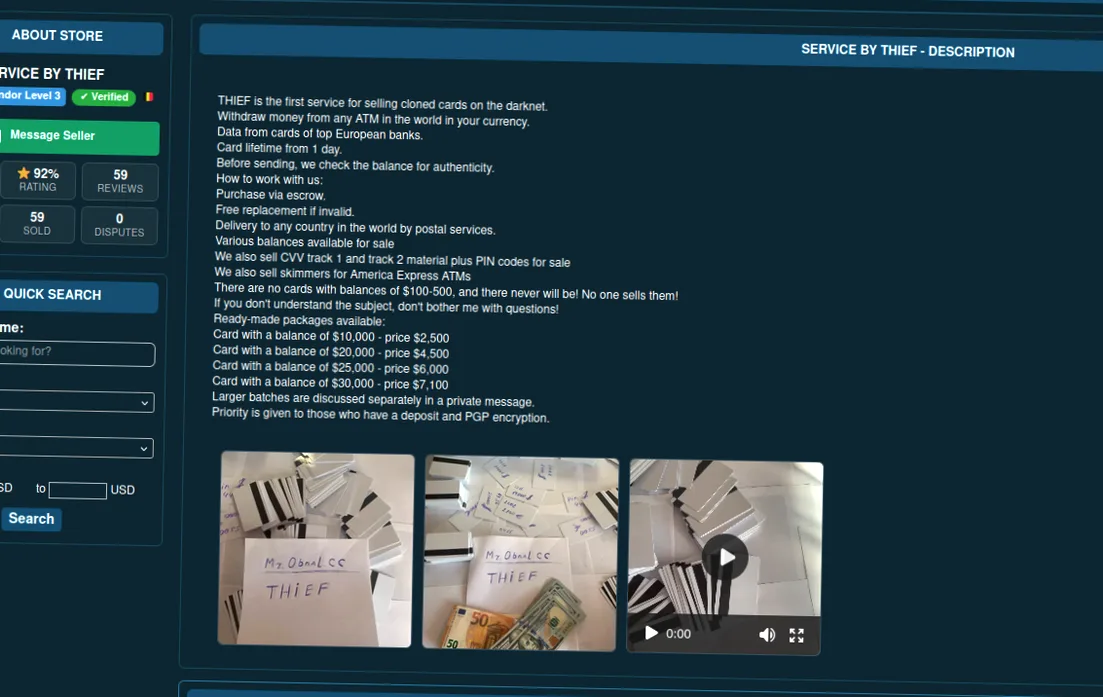
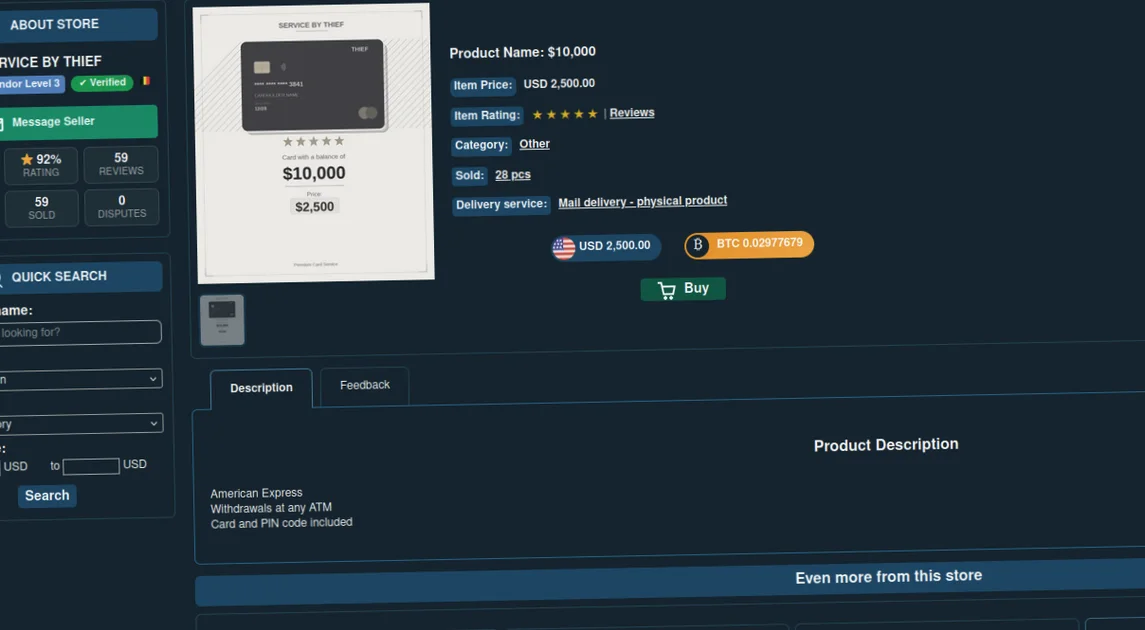
Mark T., aged 34 and living in Tampa Bay, Florida, sought financial gain through illegal means in November 2024. He acquired six cloned debit cards equipped with PIN codes from an online marketplace on the dark web for the sum of 480 dollars paid in cryptocurrency. The transaction appeared routine yet resulted in his identification and sentencing to five years in federal prison after four successful ATM withdrawals totaling 4,900 dollars.
This account examines the specific sequence of events in his case without providing guidance on illegal activities. ATM cameras played a central role in ending his anonymity despite the use of privacy-focused payment methods. The chain of evidence extended from a crypto wallet through transaction logs to the U.S. Secret Service, highlighting vulnerabilities in such operations.
The website where the purchase was made operated as part of carding forums dark web networks where similar products are exchanged. Investigation records show that physical evidence collection at ATM locations proved decisive regardless of efforts to obscure digital footprints.
Key takeaways
- ATM cameras captured clear facial evidence leading to database match within eight days of initial reports.
- KYC requirements on cryptocurrency exchanges created traceable links despite Monero selection.
- Geographic clustering of withdrawals within 40 miles triggered automated fraud detection systems.
- Physical items seized during search provided direct matching evidence to victim account data.
- Combined fine, restitution and supervision requirements totaled significant long-term consequences.
What Is the Process Behind Cloned Card Transactions?
The sequence begins with acquisition of magnetic stripe data. Criminal groups obtain track one and track two information via multiple methods including installation of devices on ATMs or through data leaks.
Data encoding follows on blank cards. These items receive printed details such as names, numbers and expiration dates to resemble legitimate banking instruments. PIN information is added when available from compromised keypads or recording equipment.
Usage occurs at cash machines before account holders detect irregularities and request blocks. Proceeds often move into cryptocurrency through exchanges or Bitcoin ATMs to reduce traceability. Final conversion completes the cycle although each stage leaves potential records.
Mark completed his purchase using Monero due to its designed resistance to following transaction paths. Cards reached him through standard mail in plain wrapping. The set included six items yet only four functioned before banks intervened.
Modern cash dispensing equipment functions beyond transaction handling. Each unit maintains multiple recording mechanisms that compile data for later review by financial institutions and law enforcement.
How Do ATM Recording Systems Contribute to Case Resolution?
Cash machines incorporate several integrated surveillance components. Primary cameras capture facial images at 1080p resolution and often include infrared capability for low light conditions.
Additional recording devices provide alternate viewing angles in select models. These remain concealed from typical user observation. Transaction documentation captures precise timestamps, withdrawn sums, card identifiers, machine locations and approval statuses.
Geographic coordinates link each event to exact placement while network records detail communications with banking processors. Such comprehensive logging transforms each withdrawal into a documented event with multiple data points.
During Mark's fourth withdrawal at a suburban Tampa Bay location the primary camera obtained a clear side profile without any facial covering. The 23-second recording proved sufficient for database comparison. This occurred after three prior successful transactions that yielded 4,200 dollars total.
Financial institutions maintain early warning networks that identify patterns across geographic areas and short timeframes. Cloned card usage across state lines triggered automatic alerts within days of initial complaints.
What Timeline Details Emerged From the Investigation?
Initial reports arrived on day one in November 2024 from three separate victims located in Florida, Georgia and North Carolina. Each reported unauthorized ATM withdrawals and contacted their respective banks for card blocks.
By day three anti-fraud algorithms detected coordinated activity involving the same card group across multiple states within a brief period. This pattern elevated the matter automatically to specialized review teams.
Transfer to the U.S. Secret Service occurred on day five given their responsibility for financial offenses. Analysts collected ATM logs and requested all associated video files from the involved machines.
Video analysis on day eight produced a matching identification when compared against Florida Department of Public Safety driver license records. Mark T. had no previous convictions. Transaction data further restricted activity to locations within 40 miles of his residence.
Electronic records review began on day 12 under court authorization. Browser activity revealed connections through Tor exit points during periods matching the marketplace visit. Monero acquisition records from a KYC-compliant platform provided identity linkage.
Search warrant execution took place on day 14. Items recovered included six unused plastic cards, a magnetic stripe read and write unit, a computer containing Tor Browser records and darknet marketplace access logs, 3,200 dollars in currency and original shipping materials.
Arrest followed the next day. Questioning resulted in admission of purchasing the set and completing four withdrawals. Two remaining cards failed due to prior blocks implemented by issuing banks.
Which Specific Figures Characterize the Case Outcome?
This overview summarizes key figures from the probe and court outcome, highlighting the financial scale, timeline, and legal consequences that followed:
| Descriptive Parameter | Recorded Figure |
|---|---|
| Aggregate penalties and repayment ordered | $22,000 |
| Number of successful cashouts | 4 |
| Length of post-release oversight | 3 years |
| Length of federal incarceration | 5 years (60 months) |
| Overall sum extracted | $4,900 |
| Price paid for the cloned cards | $480 |
| Time from initial cashout until detention | 15 |
These values derive directly from court documents and bank reports. The net financial result after costs left limited gains before seizure of remaining cash during the property search. Restitution requirements addressed losses experienced by the three identified account holders.
How Did Privacy-Focused Payment Methods Fail to Prevent Identification?
Monero selection represented an attempt to limit transaction visibility. However the acquisition process required interaction with a centralized platform that mandated identity verification through passport and photographic documentation.
Court directives compelled the exchange to release purchaser details tied to the exact date and transferred amount. This initial link established connection despite subsequent movement challenges inherent to the currency.
Temporal alignment across multiple stages strengthened the overall evidence set. Monero purchase, marketplace transaction, physical delivery and ATM activity all fell within a two-week window creating overlapping records.
Recovered physical items contained magnetic data that corresponded precisely to information taken from victim accounts. Such tangible matches provided confirmation independent of digital currency trails.
Camera footage offered irrefutable visual association with the specific transaction moments. This element maintained validity even if other components had contained gaps or required additional corroboration.
What Errors Contributed to Rapid Case Closure?
Geographic concentration of activity represented the initial oversight. All four ATM locations fell inside a 40-mile area surrounding the residence which activated pattern recognition protocols in monitoring systems.
Absence of any physical alterations to appearance allowed direct facial capture. No mask, glasses or head covering appeared in the recording submitted for database comparison.
Reliance on a KYC-regulated service for obtaining Monero created a direct identity association. Verification materials submitted at the exchange matched the individual later identified through video analysis.
Retention of all associated materials within the living space facilitated comprehensive evidence collection. The seized laptop retained browser histories and Tor usage indicators despite any deletion attempts.
Cash holdings matched dispensed denominations and quantities from the ATM transactions. This correspondence reinforced connections during forensic review.
Condensed schedule of activity within two weeks accelerated detection. Extended spacing might have delayed alerts although visual records would still have enabled eventual linkage.
How to Check for Credit Card Skimmers at ATM Locations
Verification procedures involve multiple inspection steps before any transaction. Users should examine the card insertion slot for added thickness or irregular attachments that differ from standard equipment appearance.
Comparison with nearby machines at the same branch can reveal discrepancies in color, alignment or protruding components. Any variation warrants selection of an alternative unit.
Keypad overlays represent another concern. These additions may feel spongy or raised compared to original surfaces. Gentle pressure testing helps identify such modifications without causing damage.
Camera positioning should be noted for unexpected angles or recent alterations. While built-in units remain standard, additional devices might appear as small additions near signage or lighting fixtures.
Before completing any withdrawal, confirm that the card reader shows no signs of tampering. Credit card skimmer protection begins with consistent visual and tactile examination of all accessible surfaces.
Financial institutions recommend adoption of contactless options where available to minimize exposure to magnetic stripe reading devices. When such alternatives are unavailable, limiting transaction frequency and monitoring account activity reduces potential impact.
Credit card skimming device detector tools exist although their reliability varies by model and update status. Manual inspection combined with immediate reporting of suspected issues provides the most practical approach for individual users.
Card skimming protection extends beyond hardware checks to include prompt notification when unauthorized activity appears. Early reporting enables faster card deactivation and reduces total exposure for all parties involved.
What Protective Measures Apply to Card Usage?
Multiple approaches exist for reducing risks associated with magnetic stripe data compromise. Physical barriers known as credit card skimmer protectors can deter casual attachment of reading devices although determined actors may circumvent them.
Awareness of how to tell if a card reader has a skimmer involves checking for mismatched coloring, loose components or abnormal protrusions around the insertion area. Similar evaluation applies when determining how to tell if there is a card skimmer present at any self-service terminal.
Routine account monitoring represents an essential practice. Many banks provide real-time alerts for transaction activity which allows immediate response to suspicious events.
Usage of virtual card numbers for online purchases limits exposure of primary account details. When physical ATM interaction becomes necessary, selection of machines located inside bank premises rather than external standalone units decreases likelihood of compromise.
Credit card skimmer protection also includes avoidance of shared or public computers for banking access. Regular review of statements helps identify patterns before significant losses accumulate.
For those researching related topics, cloned cards reddit discussions occasionally reference user experiences although such platforms do not constitute verified security resources. Similarly, cf card cloning references appear in technical contexts unrelated to criminal applications.
Implementation of card skimming protector solutions should follow manufacturer guidelines precisely. No single method eliminates all potential threats therefore layered approaches yield better results than reliance on any individual technique.
Before using any ATM, verify that the equipment matches expected design specifications for that bank. How to check for credit card skimmers includes both visual assessment and attention to any unusual resistance when inserting or removing the card.
What Broader Implications Does This Case Present?
The sequence of events in this matter illustrates the intersection between online anonymity tools and physical world evidence collection. ATM surveillance combined with banking analytics and court-ordered record disclosure created a complete evidentiary chain within fifteen days. Mark T. received a sixty-month federal prison sentence plus three years of supervised release, a twenty-two thousand dollar financial penalty and restitution obligations.
Financial crime investigations increasingly integrate digital transaction data with traditional forensic methods. While privacy-oriented cryptocurrencies present challenges for tracing, entry and exit points within the financial system often provide necessary linkage. The case outcome underscores that visual identification at the point of cash withdrawal frequently overrides other protective measures.
Security measures such as credit card skimming protection continue to evolve yet individual vigilance remains necessary. Regular application of how to check for credit card skimmers and prompt reporting of irregularities support broader system integrity. The final determination emphasized that end users of such materials assume substantial operational risks despite limited roles in larger criminal networks.
Questions readers ask
How long did the investigation take from first withdrawal to arrest in this cloned card matter?
Fifteen days passed between the initial ATM activity and custody. Bank reports on day one led to Secret Service involvement by day five. Video matching and electronic warrants culminated in the search on day 14 and arrest the following morning.
What amount was paid for the set of six cloned debit cards with PIN codes?
The purchase price totaled 480 dollars transferred in Monero. This cost preceded four successful withdrawals amounting to 4,900 dollars. Remaining cash and physical cards were later seized during the authorized property search.
Which federal statutes formed the basis for the guilty plea and sentencing?
Charges included fraud and related activity in connection with access devices under 18 U.S.C. § 1029 along with money laundering provisions in 18 U.S.C. § 1957. The U.S. District Court for the Middle District of Florida imposed the sixty-month term in March 2025.
How can individuals apply credit card skimmer protection when using ATM equipment?
Examination of card readers for added bulk, color differences or loose parts forms the initial step. Comparison against identical machines at the same location helps identify anomalies. Immediate account monitoring and prompt reporting of suspicious transactions further support card skimming protection measures.
Related resources
We keep a short list of services we check regularly.